
Kākāpō Baby Boom!
What is a Kākāpō? It's a parrot, but barely resembles what most people picture when they hear that word. It's a flightless, nocturnal parrot, critically endangered, with roughly 240 adults alive today. They're huge, moss-green, and look a little like the lovechild of an owl and a parrot . They are exclusively found in New Zealand.
New Zealand's Kākāpō just had its biggest breeding season ever recorded. The final confirmed count came in at 106 chicks hatched in 2026, blowing past the previous record of 73 fledglings set back in 2019. For a species this rare this is huge news !
They primarily breed every 2 - 4 years when rimu trees produce a mass fruiting event. This is called a mast event. The rimu trees produced their most abundant fruit crop on record, and the birds responded accordingly. What makes this recovery remarkable is how the DOC team used genetic pairing decisions, egg fostering, incubators, and even 3D-printed eggs that chirp to prepare mothers for when their chick hatches.
We breed color mutations today, but our passion for parrots runs deeper than that. Luma Aviaries was built with conservation breeding as a long term goal and stories like this one are exactly why, through advocacy, research and education we can work together to preserve these amazing animals.
If you want to follow along, the Kākāpō Files podcast covers each season in real time and is genuinely worth a listen even if you're not a bird person. And the New Zealand Department of Conservation posts updates at doc.govt.nz. as well as
https://www.doc.govt.nz/our-work/kakapo-recovery/what-we-do/technology/
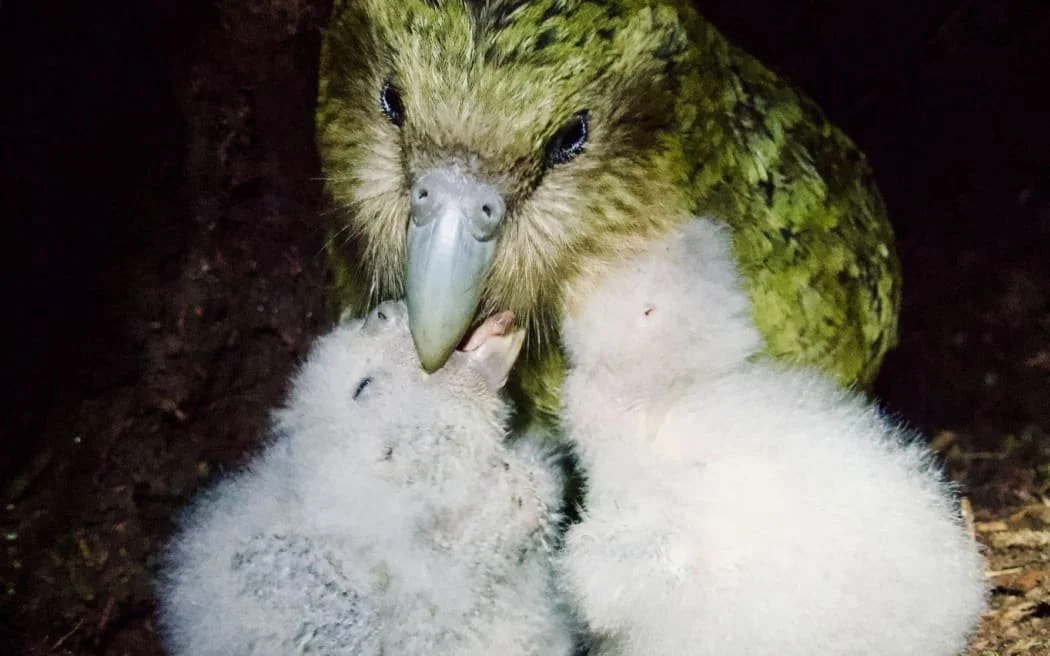
Kākāpō chicks Tīwhiri-A3 & Tīwhiri-A4 in the nest with their mother, March 2026. Photo: Maddy Whittaker / DOC