
 Image 1 of 2
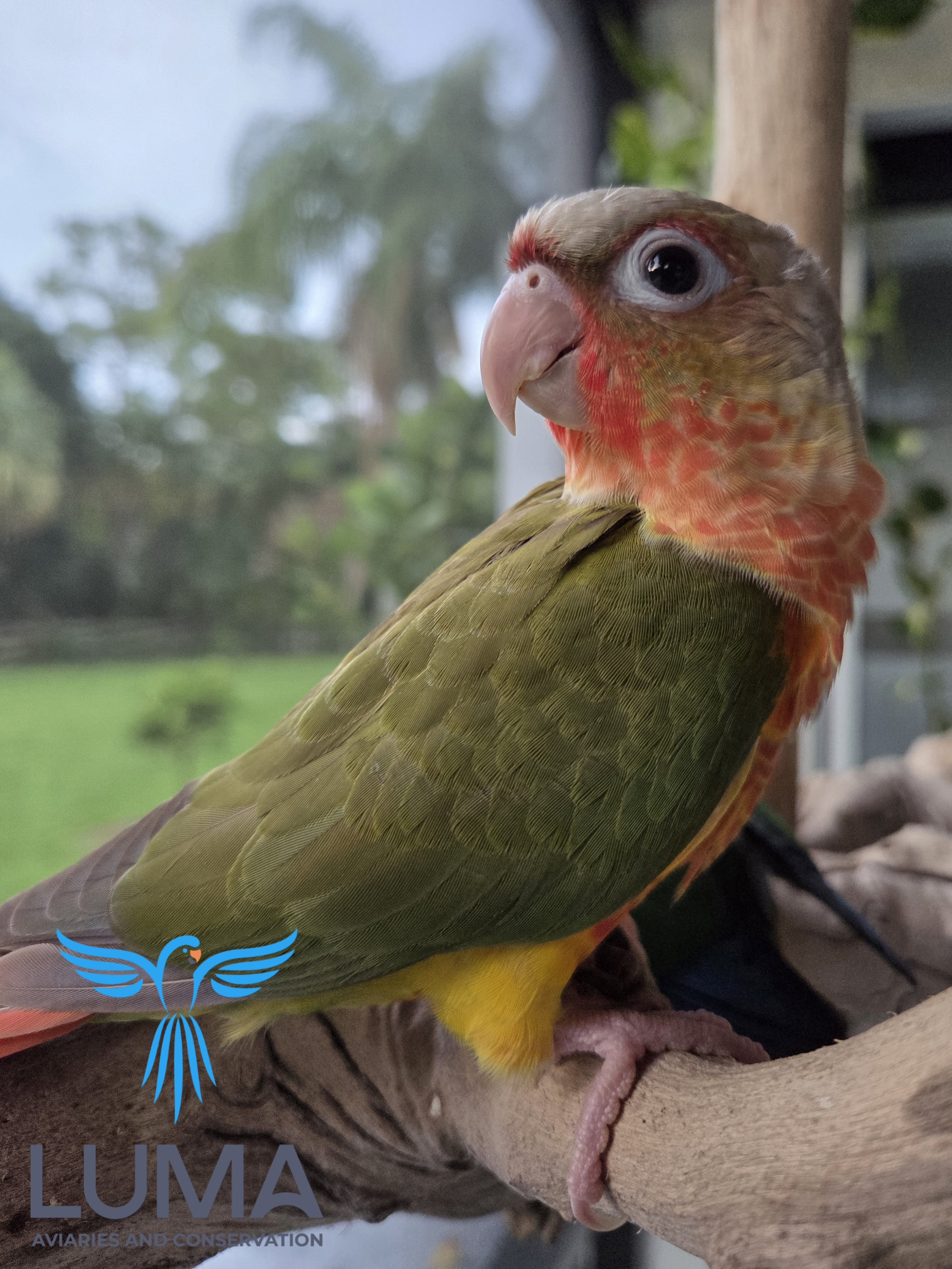 Image 2 of 2
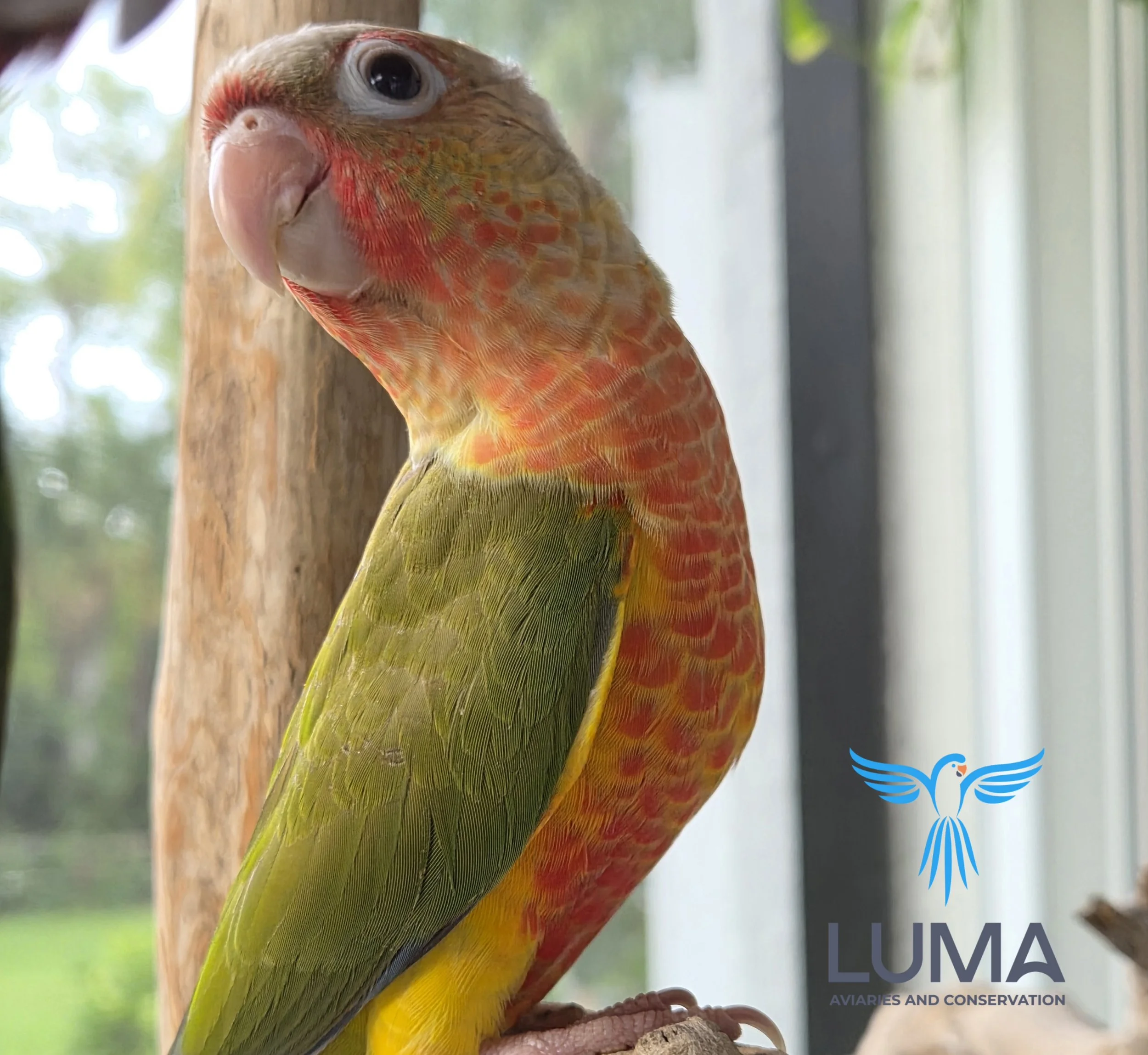
Sweet handfed Green Cheek Conure Hatch Day 5-25-26 . Ready to go home in a few weeks.
Green Cheek Conure
Scientific Name: Pyrrhura Molinae
Native Range: Arid lowland scrub and dry forests along the Pacific coast of Ecuador and northwestern Peru
Conservation Status: Least Concern (IUCN); wild populations remain stable across their range
Lifespan: 15-25+ years in captivity
Green Cheek Conures are small parrots reaching approximately 10 inches in length and weighing 2-3 ounces. Their coloring features primarily green plumage with a brown-grey crown, white eye rings, and a distinctive maroon tail. The chest has scalloped brown-and-white markings that fade into a red-tinted belly patch. Blue flight feathers flash during movement. Many Mutations available.
Housing: Minimum recommended cage size of 24"W × 24"D × 30"H with bar spacing no wider than ½ inch. Include multiple natural wood perches of varying diameters, swings, and a rotating selection of toys. These are active climbers who love hanging upside down and exploring every corner of their environment.
Diet: high quality pellets, fresh vegetables daily. Some good vegetables include leafy greens, carrots, peppers, and broccoli. Offer fruit in smaller amounts. Keep fresh water available at all times. Save seeds and nuts for training rewards rather than making them dietary staples.
Sweet handfed Green Cheek Conure Hatch Day 5-25-26 . Ready to go home in a few weeks.
Green Cheek Conure
Scientific Name: Pyrrhura Molinae
Native Range: Arid lowland scrub and dry forests along the Pacific coast of Ecuador and northwestern Peru
Conservation Status: Least Concern (IUCN); wild populations remain stable across their range
Lifespan: 15-25+ years in captivity
Green Cheek Conures are small parrots reaching approximately 10 inches in length and weighing 2-3 ounces. Their coloring features primarily green plumage with a brown-grey crown, white eye rings, and a distinctive maroon tail. The chest has scalloped brown-and-white markings that fade into a red-tinted belly patch. Blue flight feathers flash during movement. Many Mutations available.
Housing: Minimum recommended cage size of 24"W × 24"D × 30"H with bar spacing no wider than ½ inch. Include multiple natural wood perches of varying diameters, swings, and a rotating selection of toys. These are active climbers who love hanging upside down and exploring every corner of their environment.
Diet: high quality pellets, fresh vegetables daily. Some good vegetables include leafy greens, carrots, peppers, and broccoli. Offer fruit in smaller amounts. Keep fresh water available at all times. Save seeds and nuts for training rewards rather than making them dietary staples.