
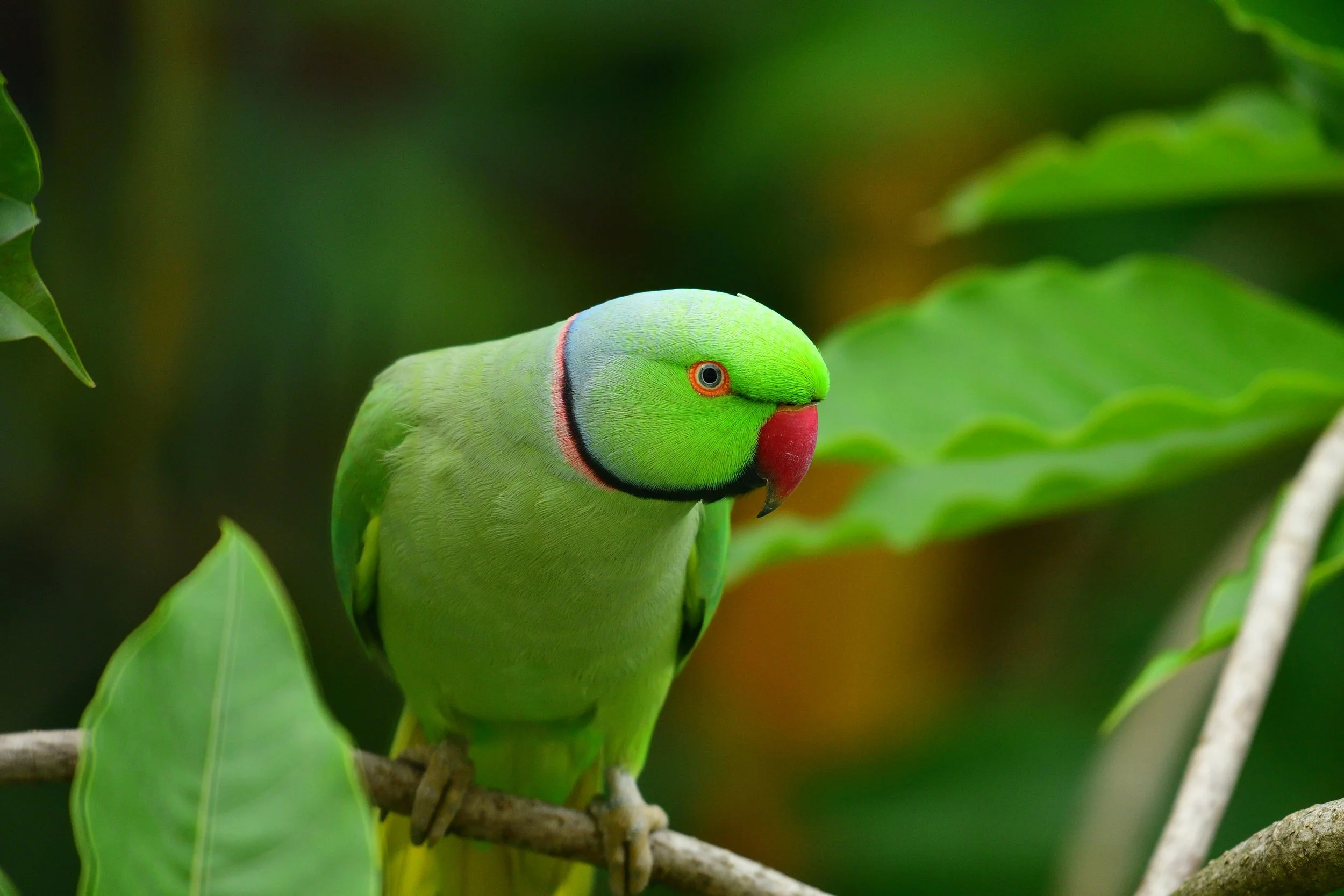
Indian Ringneck Parakeets
Scientific Name: Psittacula Krameri
Native Range: Indian subcontinent including India, Nepal, Sri Lanka, and Pakistan
Conservation Status: Least Concern (IUCN) with increasing population trends
Lifespan: 20-30+ years in captivity
Indian Ringnecks are medium sized parakeets averaging 16 inches (40 cm) from head to tail, weighing 110-130 grams. Males develop a distinctive black and rose-colored neck ring at maturity (18 months to 3 years). Wild-type coloration is emerald green with over 30 captive-bred color mutations available including blue, yellow, and violet.
Housing: Due to their active nature and long tails, these birds need roomy cages at least 24 inches in each direction (width, depth, height). Horizontal bars allow for climbing exercise. Include perches of different diameters for foot health and supply plenty of chew toys that can be destroyed and replaced.
Diet: high quality pellets, fresh vegetables daily. Think leafy greens, carrots, peppers, and broccoli. Offer fruit in smaller amounts. Keep fresh water available at all times. Save seeds and nuts for training rewards rather than making them dietary staples.
Photo Credit : Sreenivas on unsplash
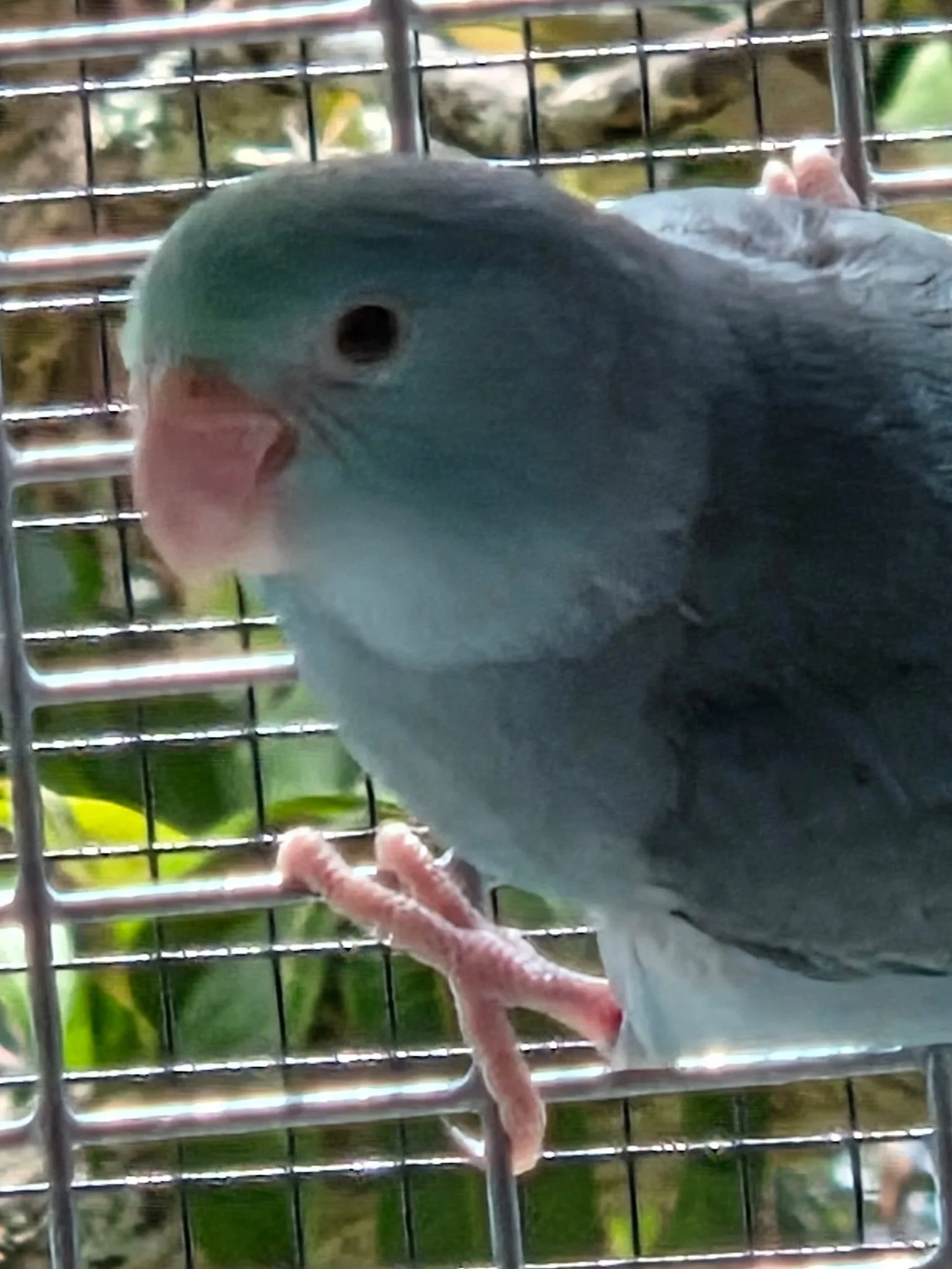
Pacific Parrotlet
Scientific Name: Forpus coelestis
Native Range: South American forests in Brazil, Bolivia, Paraguay, and Argentina
Native Range: Arid lowland scrub and dry forests along the Pacific coast of Ecuador and northwestern Peru
Conservation Status: Least Concern (IUCN); wild populations remain stable across their range
Lifespan: 15-20+ years in captivity
Parrotlets are among the smallest parrots in the world. A typical specimen measures 11–14 cm (4.3–5.5 inches) in length and weighs approximately 30 grams. Wild Pacific Parrotlets are primarily green with a dusty grey cast, a bright green mask, and a pinkish beak. Males are sexually dimorphic, featuring blue streaks behind the eyes, blue rumps, and blue wing patches that can range from bright cobalt to a pale lavender shade. Many color mutations are available. We currently breed; pied, blue and turquoise.
Housing: Minimum recommended housing for a single parrotlet is about 18" × 18" in size, with bar spacing no larger than ½" to ensure your bird's head cannot get caught. Wider cages are preferable over taller ones as they allow for more natural movement. Include multiple small-diameter natural wood perches, swings, and shreddable toys. Parrot kabobs and other shreddable toys are parrotlet favorites.
Diet: high quality pellets, fresh vegetables daily. Some good vegetables include leafy greens, carrots, peppers, and broccoli. Offer fruit in smaller amounts. Keep fresh water available at all times. Save seeds and nuts for training rewards rather than making them dietary staples.
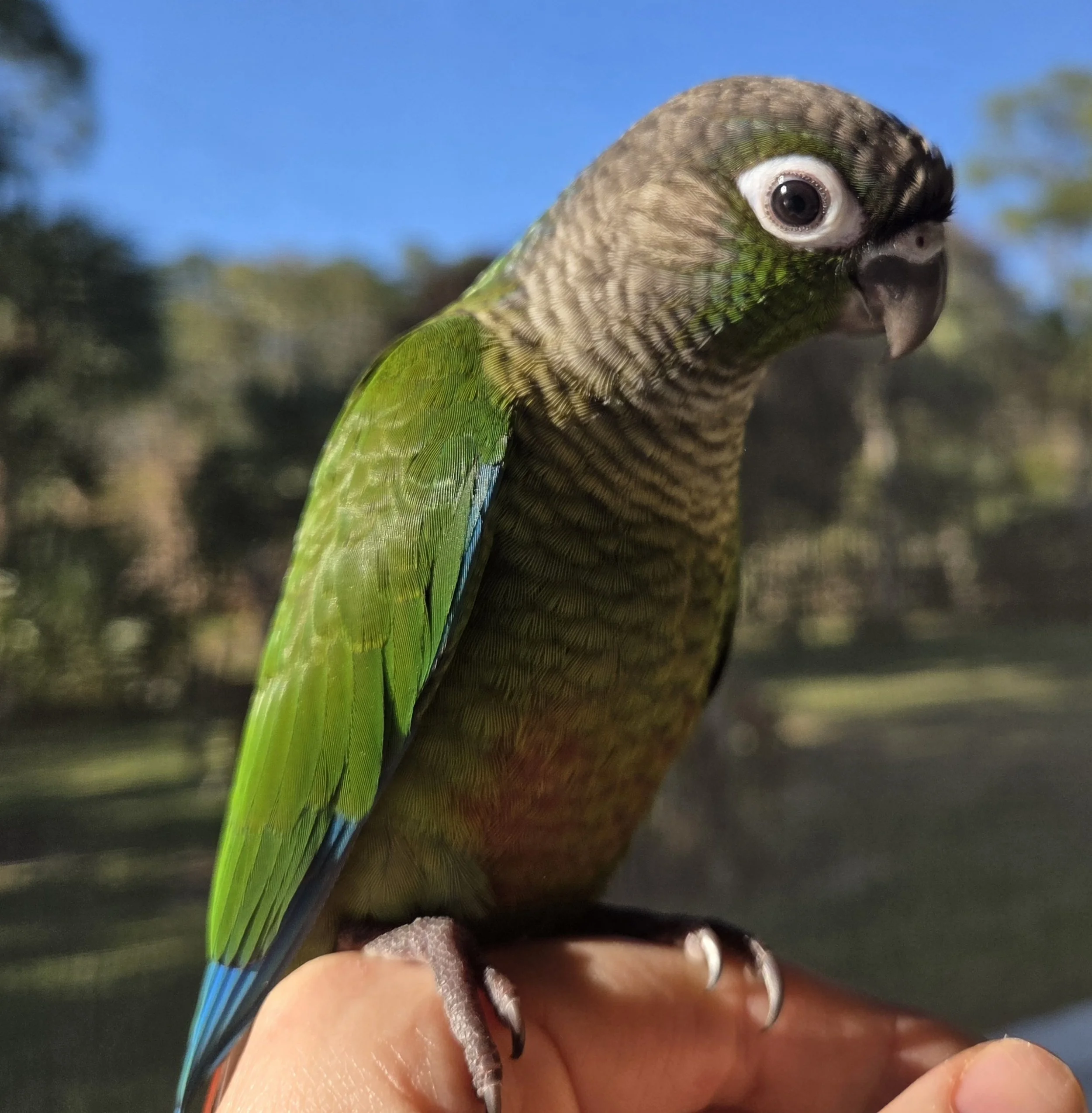
Green Cheek Conure
Scientific Name: Pyrrhura Molinae
Native Range: Arid lowland scrub and dry forests along the Pacific coast of Ecuador and northwestern Peru
Conservation Status: Least Concern (IUCN); wild populations remain stable across their range
Lifespan: 15-25+ years in captivity
Green Cheek Conures are small parrots reaching approximately 10 inches in length and weighing 2-3 ounces. Their coloring features primarily green plumage with a brown-grey crown, white eye rings, and a distinctive maroon tail. The chest has scalloped brown-and-white markings that fade into a red-tinted belly patch. Blue flight feathers flash during movement. Many Mutations available.
Housing: Minimum recommended cage size of 24"W × 24"D × 30"H with bar spacing no wider than ½ inch. Include multiple natural wood perches of varying diameters, swings, and a rotating selection of toys. These are active climbers who love hanging upside down and exploring every corner of their environment.
Diet: high quality pellets, fresh vegetables daily. Some good vegetables include leafy greens, carrots, peppers, and broccoli. Offer fruit in smaller amounts. Keep fresh water available at all times. Save seeds and nuts for training rewards rather than making them dietary staples.