
Green-Cheeked Conure Color Mutations Overview
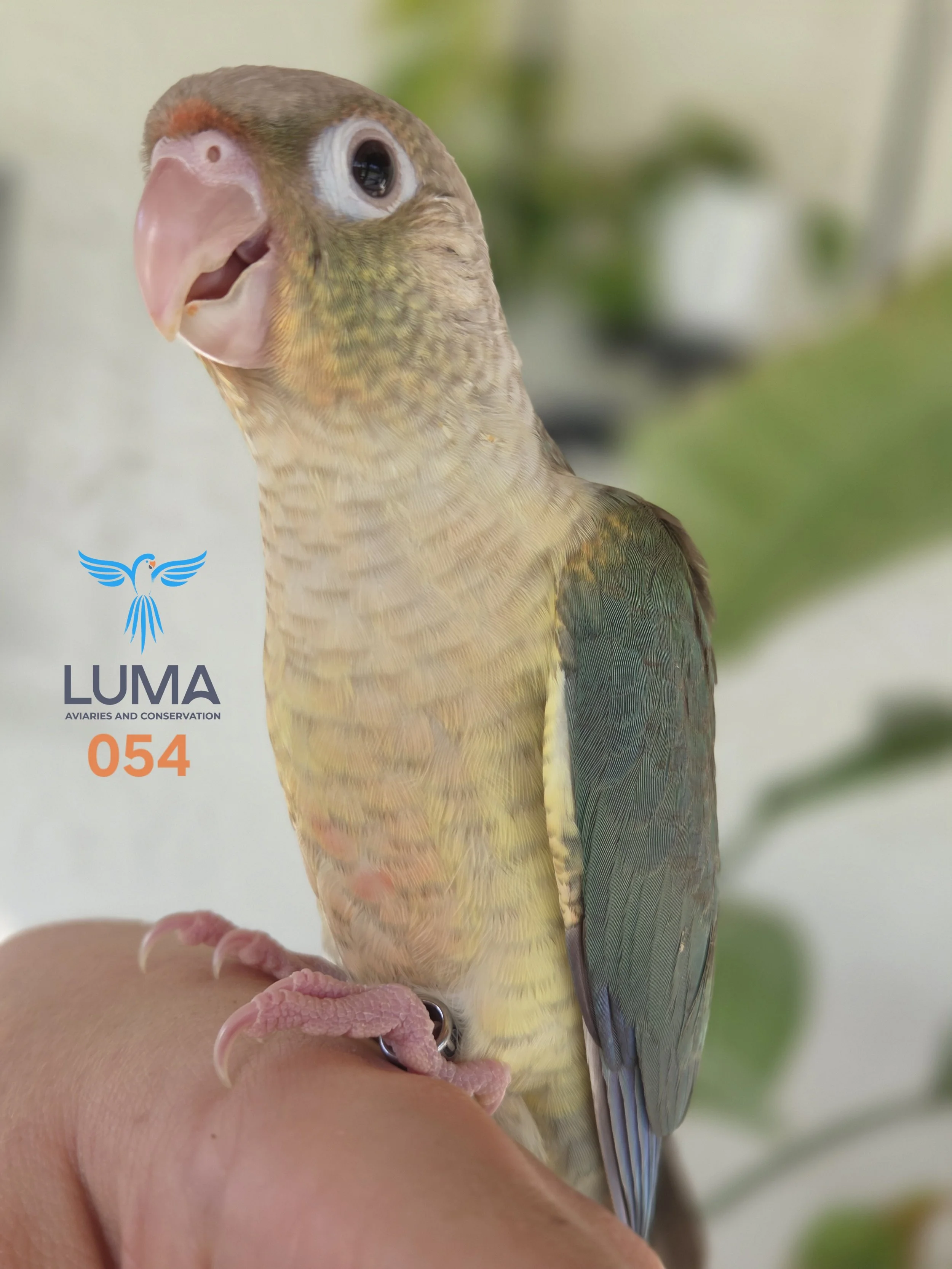
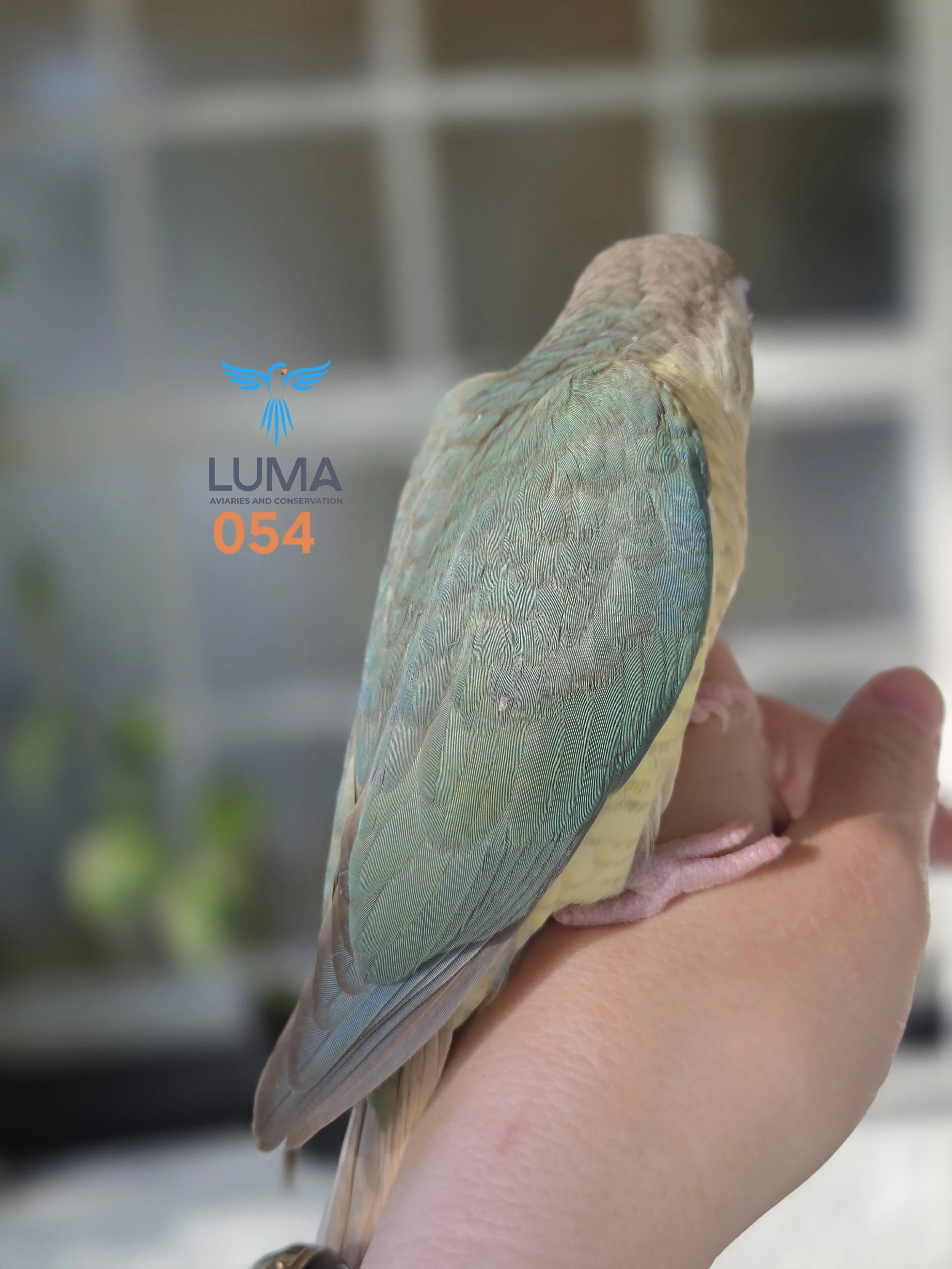
Turquoise Pineapple: a combination of turquoise, cinnamon, and opaline
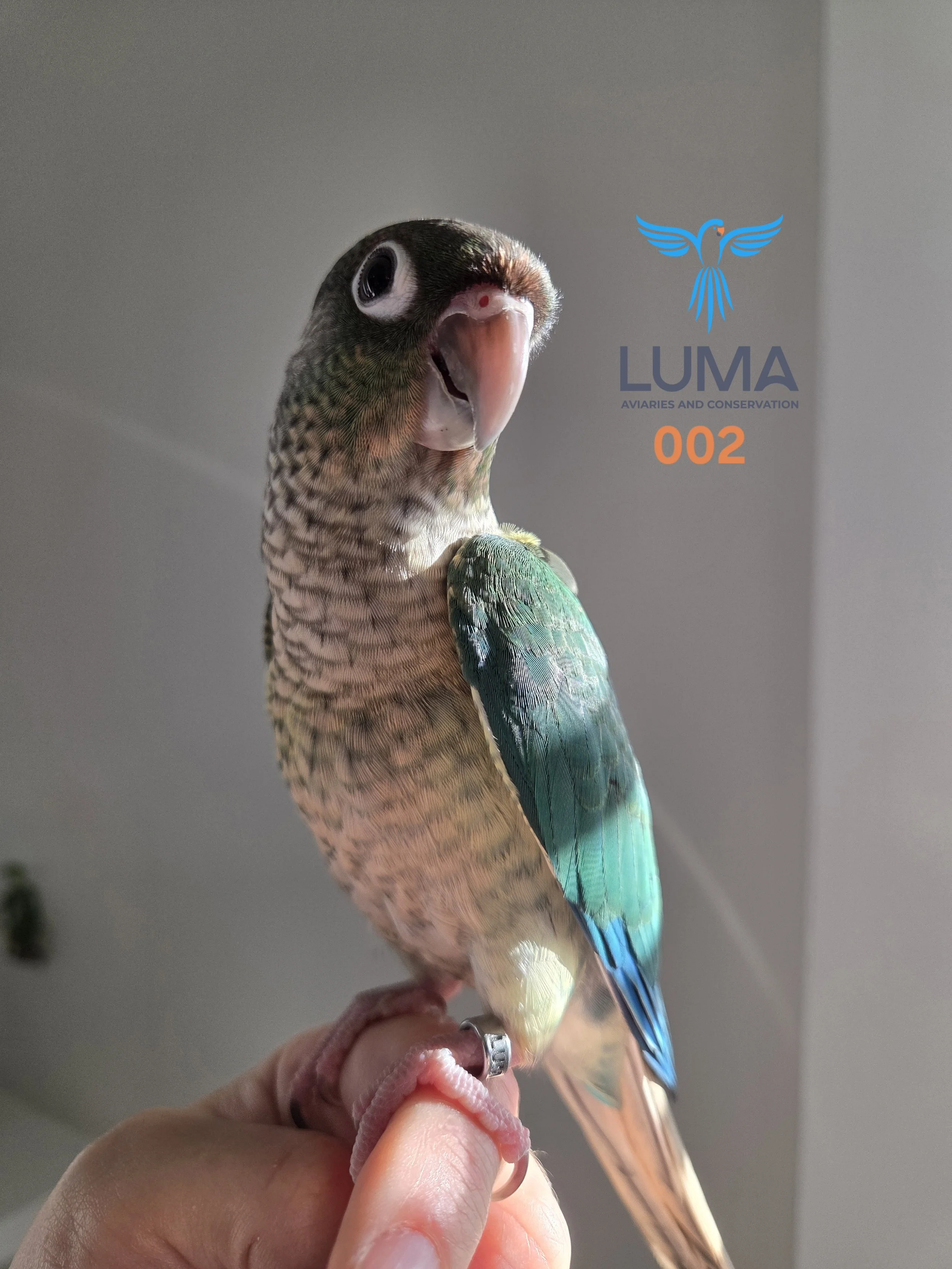
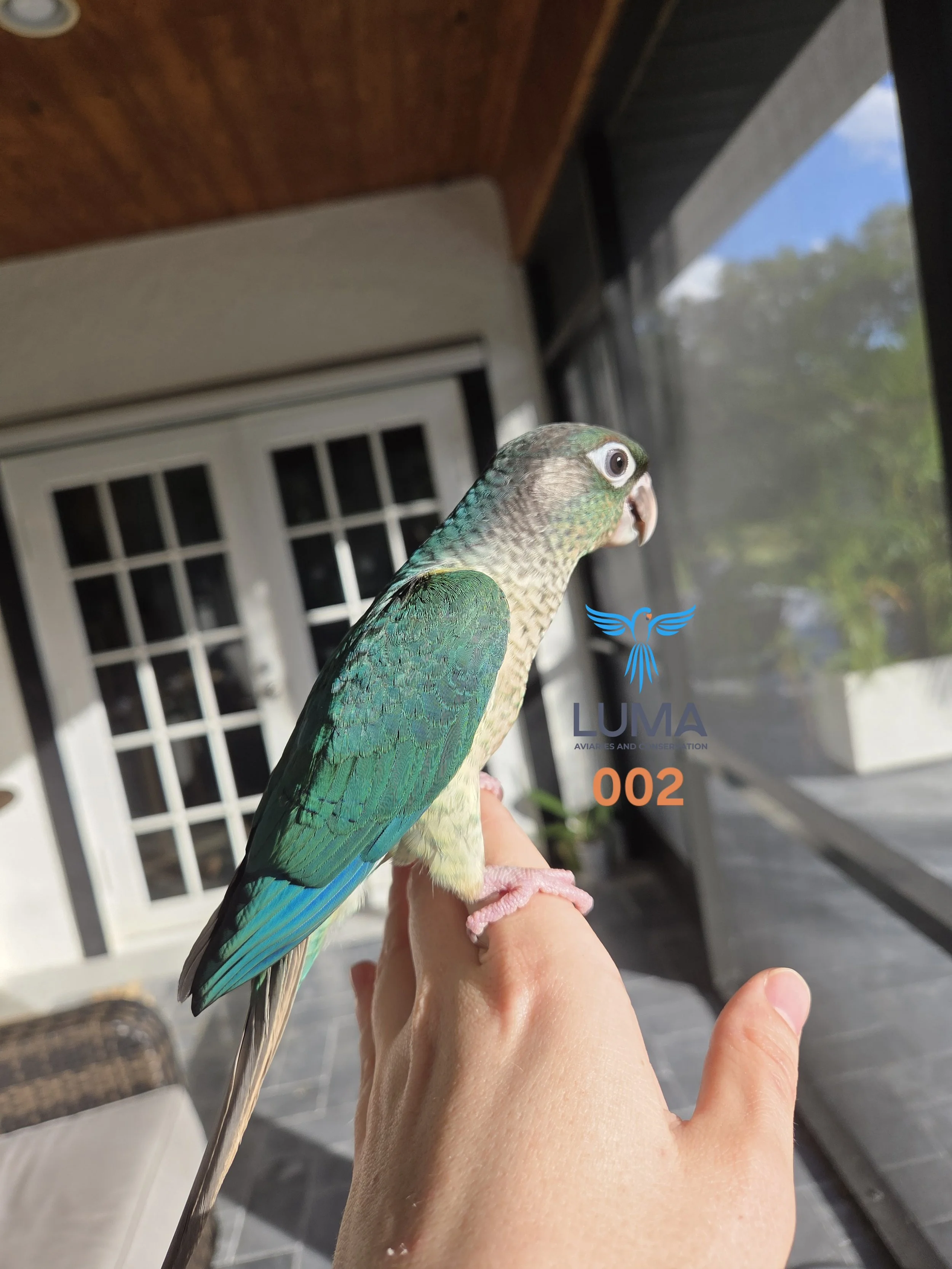
Turquoise Yellowsided : A combination of Turquoise and Opaline
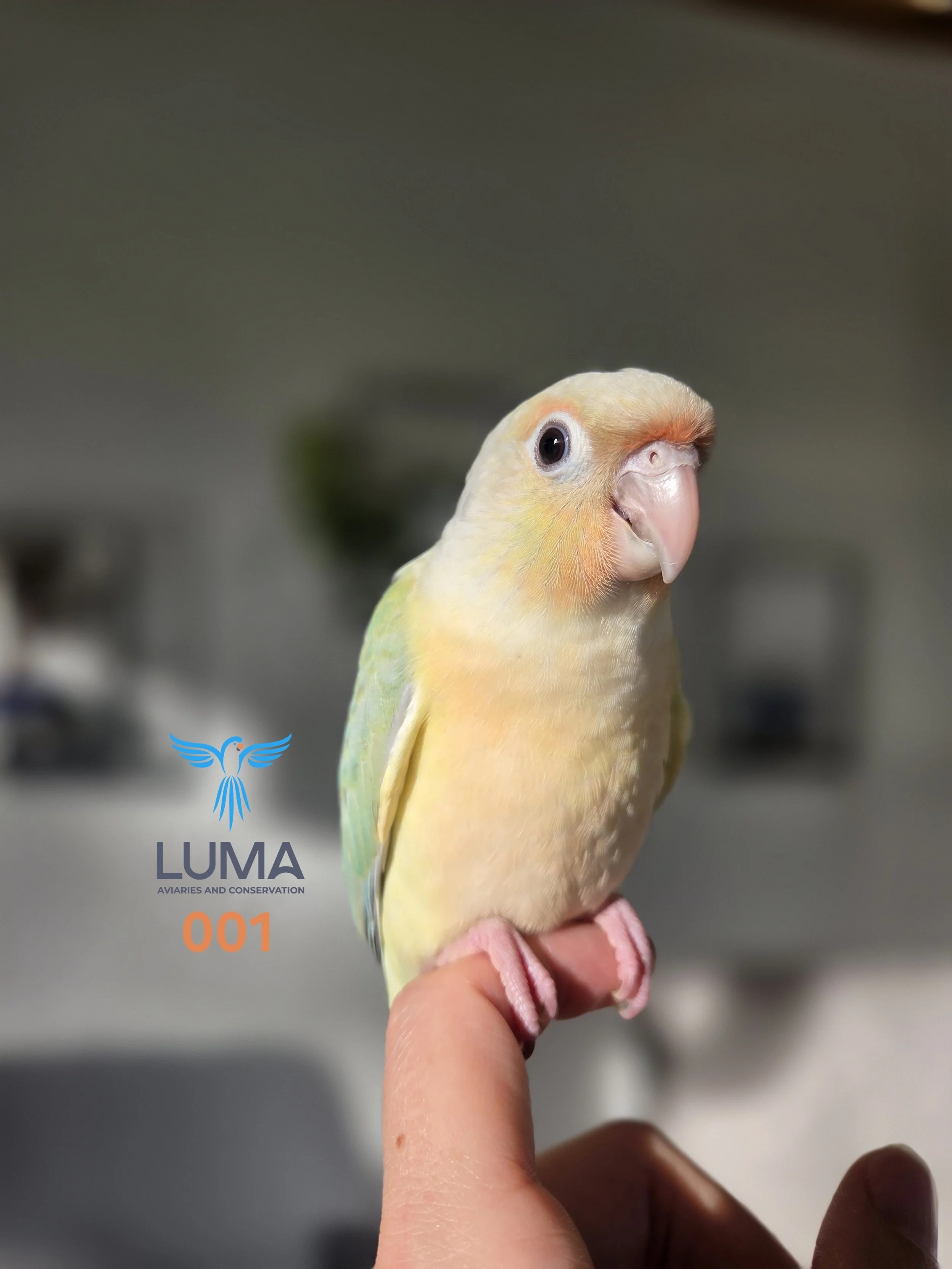
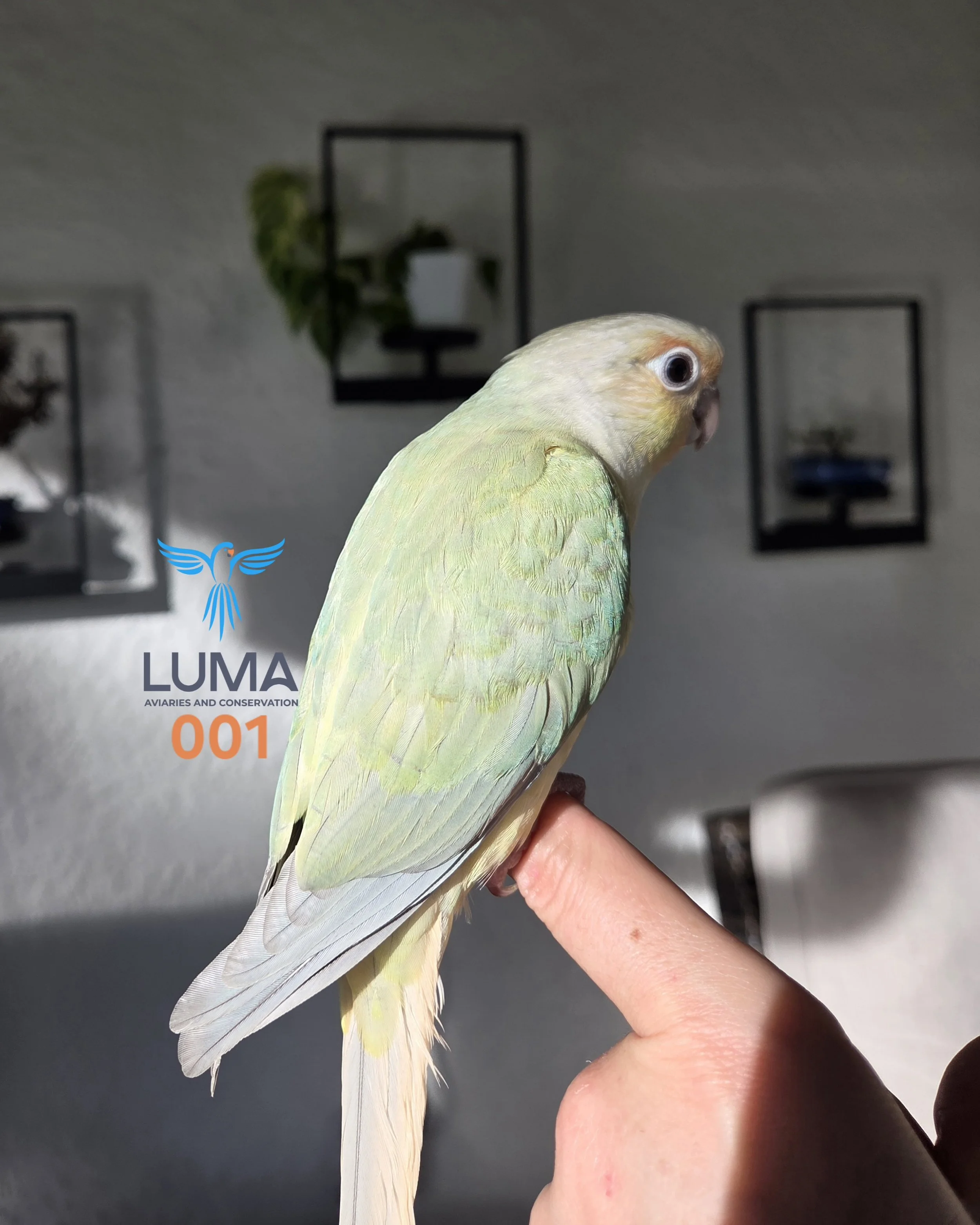
Opamint : A combination of Opaline, Turquoise and mint.
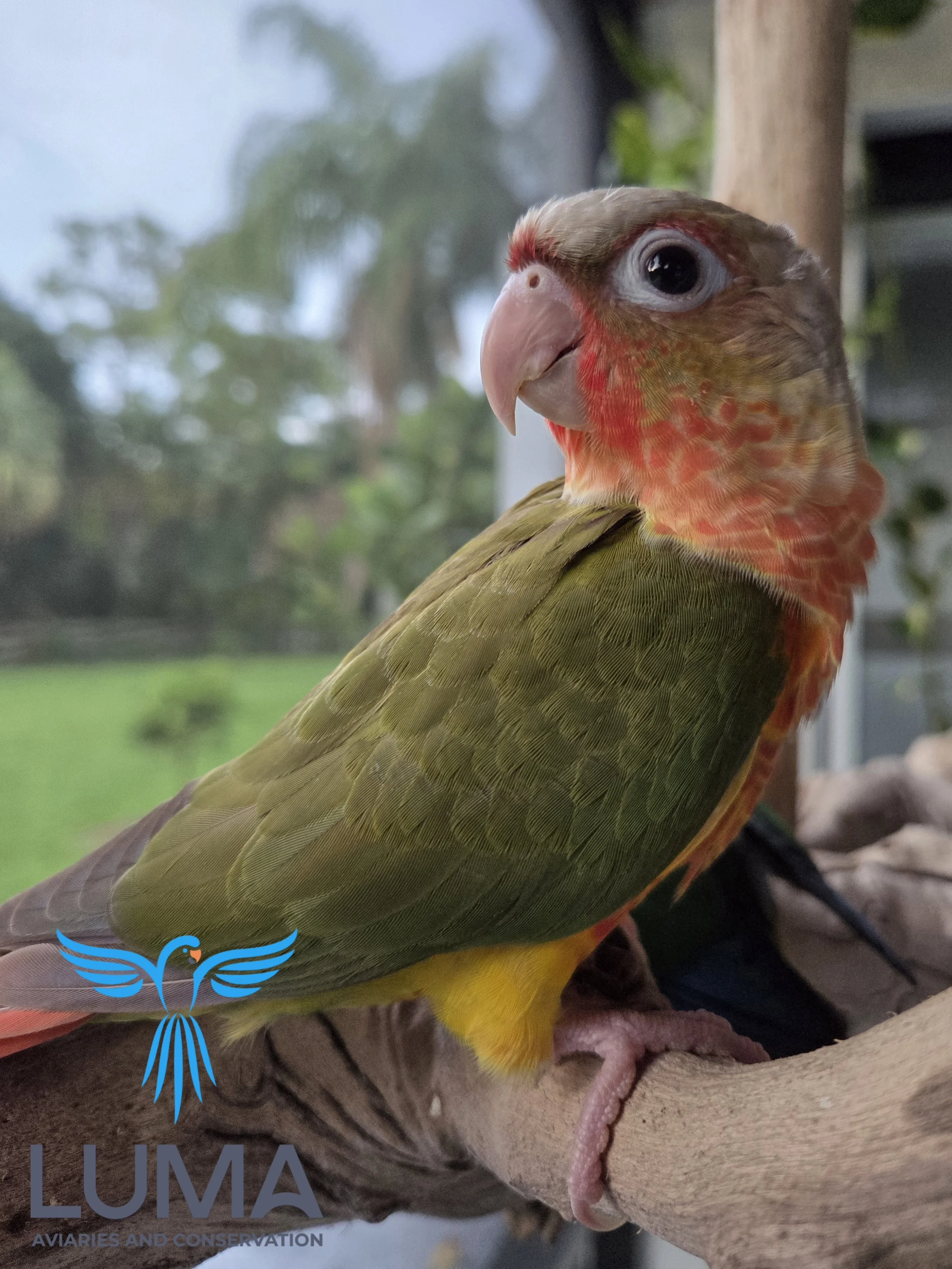
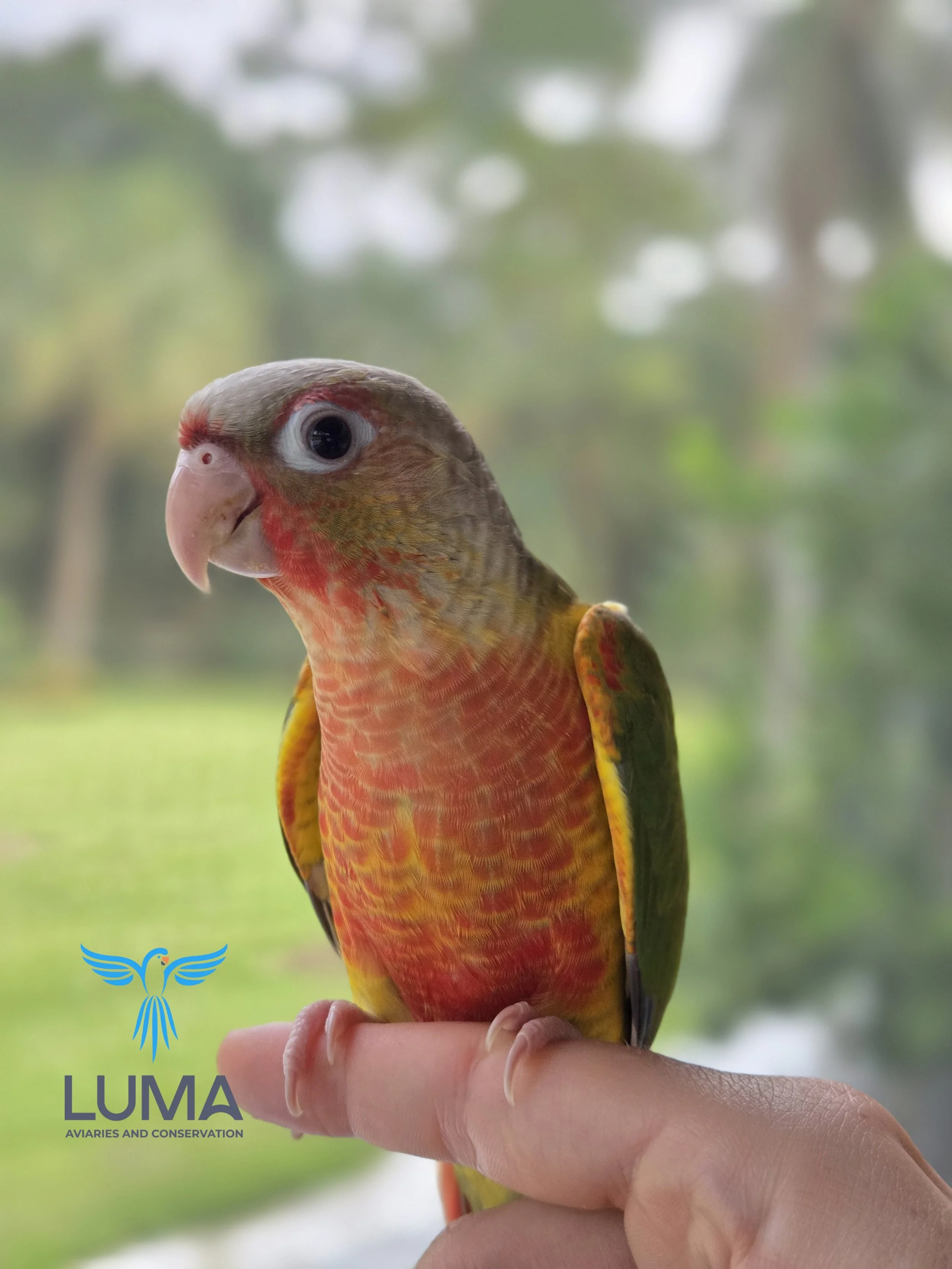
Pineapple : a combination of cinnamon and opaline
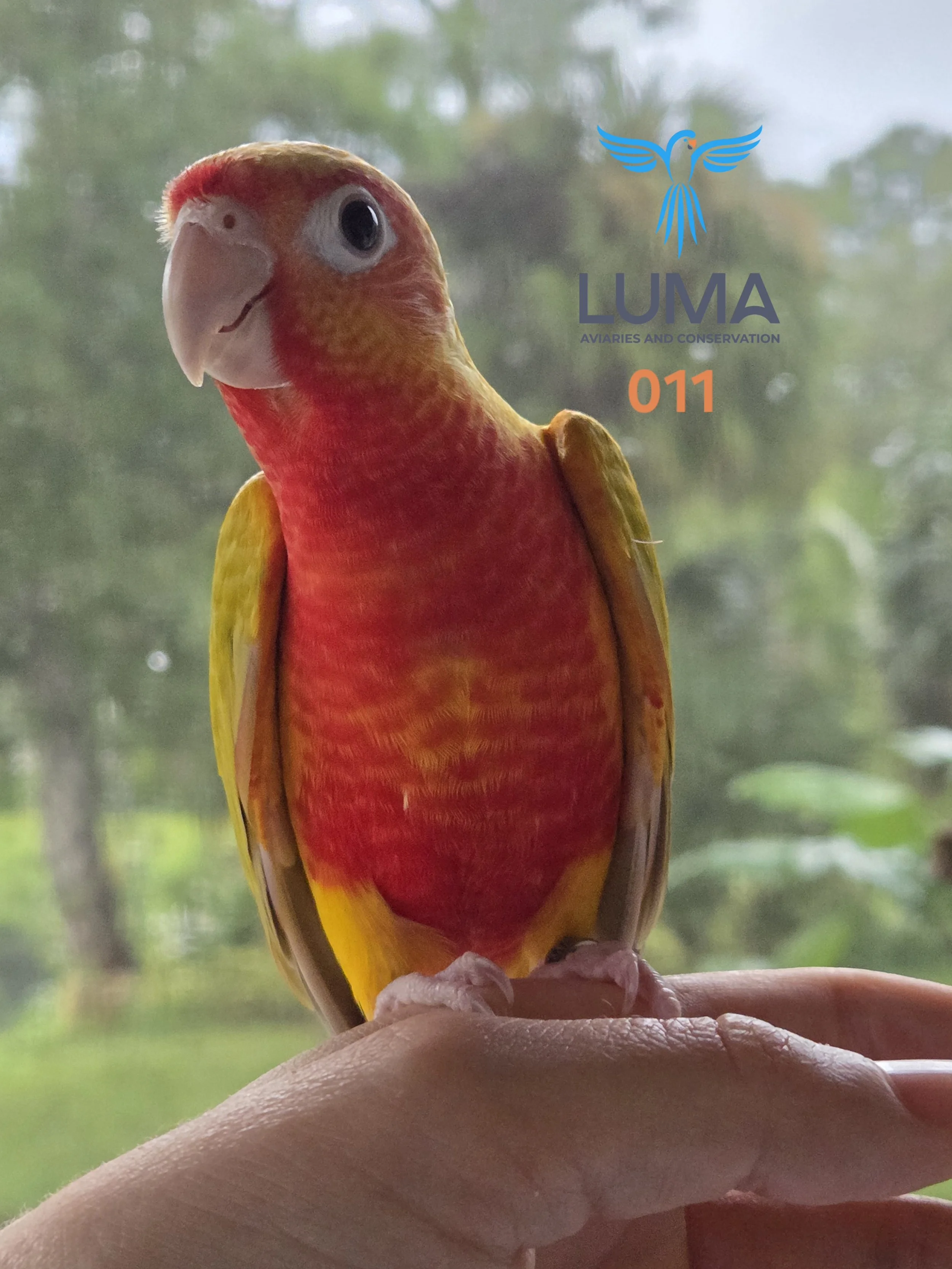
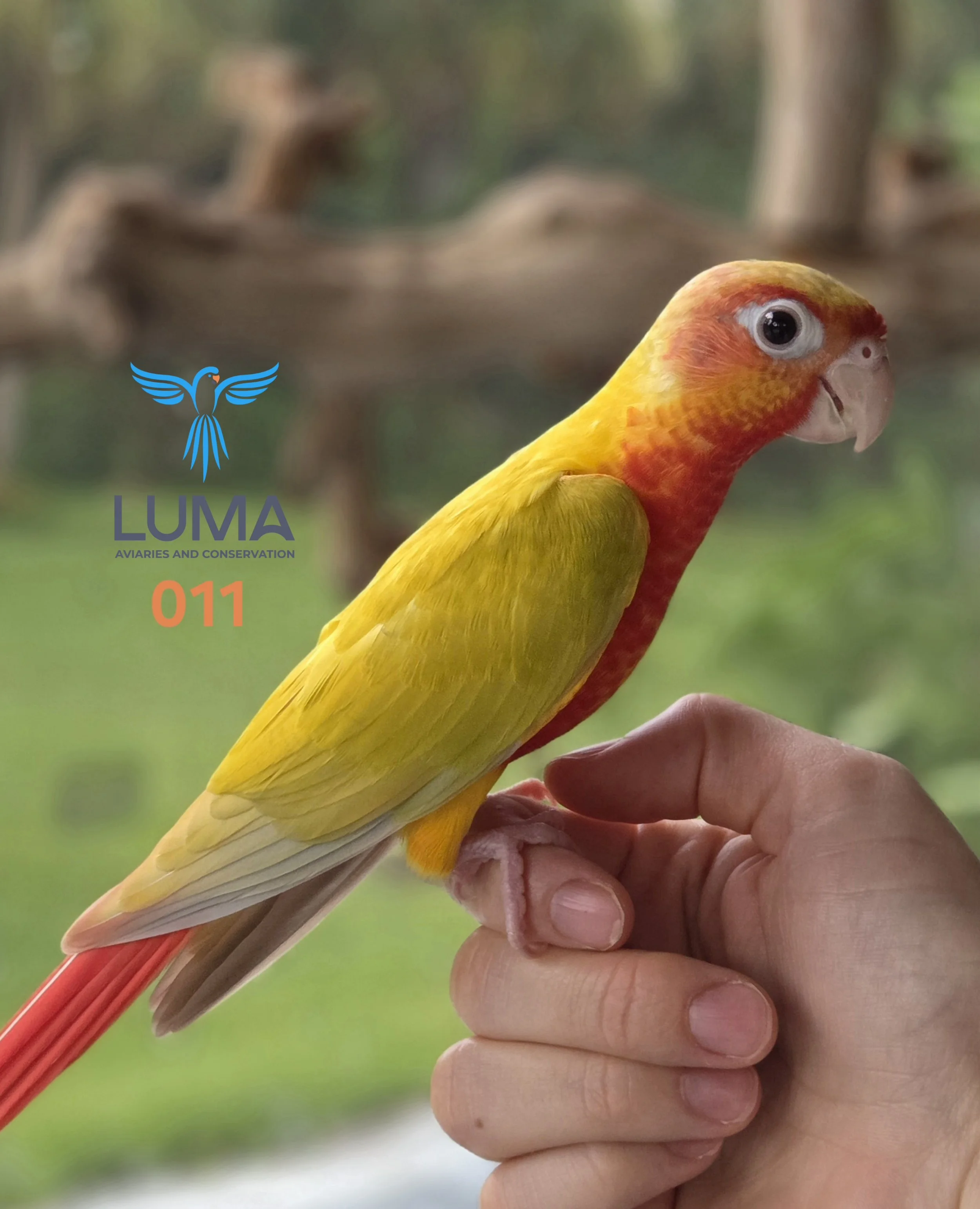
Dominant Red Suncheek: A combination of Dominant Red, Cinnamon, Opaline, and Dilute.
What do these mutations do?
Melanin Altering/Reducing mutations
-
Inheritance: Sex-linked recessive (Z-linked)
The cinnamon mutation reduces eumelanin synthesis, converting black/dark melanin to a warmer phaeomelanin-like brown. This shifts the overall body color from green to a warm, brownish-olive green. The grey chest barring becomes tan/beige, the red belly is typically brighter, and the eyes appear red at hatch, maturing to a dark plum-red rather than the dark brown/black of wild-type. Feather shafts are also lightened.
Because it is sex-linked, females only need one copy to express the trait; males need two. This means that a male can carry this trait hidden.
-
Inheritance: Sex-linked recessive (Z-linked)
Opaline/Yellow-sided reduces eumelanin specifically on the chest, sides, and flanks, revealing the underlying psittacofulvin (yellow/orange) pigments that are normally masked.
The result is a bird with a vivid yellow-to-orange chest and flanks, bright red belly, and a relatively normal green back and wings. The grey barring on the chest is eliminated or greatly reduced. Eye color remains dark.
**Opaline mutation birds can be selectively bred to have higher expressions of red or yellow. Commonly referred to as (high-red), not to be confused with Dominant Red.
-
Inheritance: Autosomal recessiveThe American Dilute is a distinct mutation separate from both cinnamon and fallow, operating on its own locus through its own mechanism. It works by reducing eumelanin across the entire bird, producing an overall softer, washed appearance the body green becomes noticeably lighter and more pastel, dark markings are muted, and the general contrast of the bird is reduced. The effect is a gentler dilution than fallow, which tends to produce a more dramatically altered bird, making American Dilute visually intermediate between wild-type and fallow in overall lightness.
Unlike fallow, eye color remains dark, which is one of the clearest distinguishing features between the two mutations. Birds carrying only one copy are visually indistinguishable from wild-type and can only be confirmed through test pairings.
The beak and feet can have a varied and sometimes mottle appearance.
Combining Dilute and Opaline can lead to a bird with a much lighter beak and light feet with dark nails
-
Inheritance: Autosomal Recessive
NSL Lutino is a rare autosomal recessive mutation that completely eliminates eumelanin, producing a bright yellow bird with red eyes, a red belly and tail, white wing feathers, and fully pink feet and bill. Because it sits on an autosome rather than a sex chromosome, both males and females are equally affected and can be splits unlike sex-linked mutations such as cinnamon or yellow-sided where females cannot carry. A bird must have two copies to be visual, and single copy carriers look completely normal. It is easily confused with the Suncheek (Cinnamon, Opaline, Dilute) but the red eye and pure white wing feathers are the distinguishing features.
-
Inheritance: autosomal recessive
Dun fallow is a rare autosomal recessive mutation first documented in Green-Cheeked Conures in South Africa in the 1980s. Its defining characteristic is an asymmetric eumelanin reduction the eyes lose pigment dramatically, producing bright red eyes, while the feathers retain most of their color and resemble cinnamon or pastel. Both males and females are equally affected, and a bird must carry two copies of the gene to express the phenotype visually single copy carriers look completely normal. The exact gene locus is still under investigation, and dun fallow birds tend to be fragile and difficult to breed successfully.
-
Inheritance: Reports of both Autosomal recessive or Autosomal Incomplete Dominant
Incomplete Dominant Pied
Pied is a mutation that creates irregular yellowish patches typically on the wings, belly, thighs, and rump over the bird's normal base coloration, while retaining dark eyes, beak, and feet. Because it's incomplete dominant, there are no hidden splits every bird carrying the gene expresses it visually, and breeding a Pied to a wild-type produces roughly 50% Pied offspring. Birds can be single factor or double factor, with double factor birds generally showing more extensive pied markings, though expression is naturally highly variable even among clutch mates. The mutation is autosomal, so males and females are equally affected.
Structural Mutations (Violet Factor, Misty, Dark Factor
-
Inheritance: Autosomal incomplete dominant
Violet factor works by modifying the nanostructure of the feather barbules, altering how light scatters and is absorbed to shift color expression toward deeper, more violet-saturated tones. Like dark factor it produces visually distinct results depending on how many copies are present single factor birds show a moderate shift in color depth, while double factor birds express the most intense violet influence. The effect is most dramatically visible in turquoise-based birds, where violet pushes the teal toward a richer, deeper blue-violet single factor producing a noticeable enhancement and double factor producing the most saturated, jewel-toned expression. On green-based birds the effect is subtle, as the yellow psittacofulvin pigment largely masks the structural color shift. Violet factor does not affect psittacofulvin pigments directly its influence is purely structural, meaning its visual impact is entirely dependent on the underlying base color of the bird. Double factor birds can be identified visually without test pairings, distinguishing violet factor from fully dominant mutations, and carry both a visual and breeding premium over single factor birds.
-
Inheritance: Autosomal incomplete dominant
The misty mutation works by modifying the nanostructure of the feather barbules, altering how light interacts with the feather surface to produce a characteristic soft, frosted appearance across the plumage. Like dark factor and violet factor it produces visually distinct results depending on how many copies are present single factor birds show a moderate frosted diffusion of color while double factor birds express the most pronounced misty effect. The structural nature of the mutation means its visual impact is influenced by the bird's underlying base color, with turquoise-based birds likely showing the most dramatic expression of the effect appearing almost bronze. Double factor birds can be identified visually without test pairings, carrying both a visual and breeding premium over single factor birds.
-
Inheritance: Autosomal incomplete dominant
Dark factor works by altering the nanostructure of the spongy medullary layer of the feather barbule the same layer responsible for producing structural color through light scattering. Dark Factor thins the spongy layer of the feather this changes how light penetrates, scatters, and is absorbed. The result is that less light is reflected back at surface wavelengths, making the color appear deeper and more saturated.
Mutations that Alter psittacofulvins (Color pigments i.e.; Red, Yellow
-
IInheritance: Autosomal recessive
The turquoise mutation is a par blue mutation it partially suppresses the production of yellow psittacofulvins in the feather barbules. In a wild-type GCC, green coloration results from yellow psittacofulvin pigment layered over blue structural color. By reducing the yellow pigment, turquoise reveals the underlying blue structural color, shifting the bird's overall appearance from green to a teal to blue-green tone.
One could selectively breed individuals for more blue coloring resulting in bluer birds over time.
-
Inheritance: Autosomal Incomplete dominant
Dominant Red is an autosomal dominant mutation that increases red psittacofulvin expression, particularly on the crown, face, and chest. It has no splits all carriers are visual. Single factor birds produce roughly 50% DR offspring when paired to a non-DR bird; double factor is associated with severe developmental defects and likely lethality.
Weepy eye in single factor Dominant Red birds is generally considered cosmetic in nature it does not appear to affect the bird's overall health or quality of life. In many cases it improves significantly after the first molt.
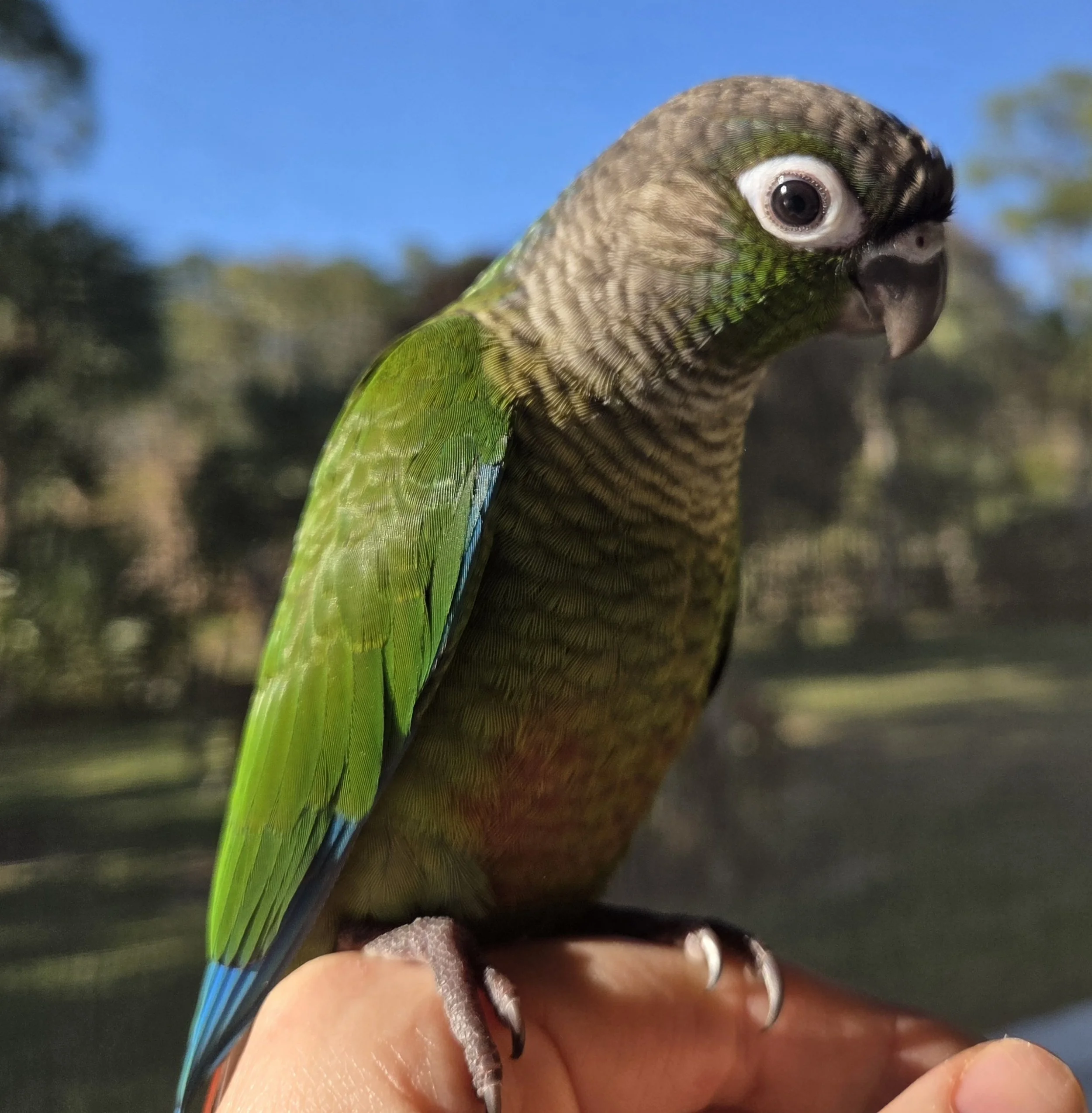
Wild Type : No Color mutations
Pineapple Green Cheek Conure : A Combination of the Opaline and Cinnamon Mutations
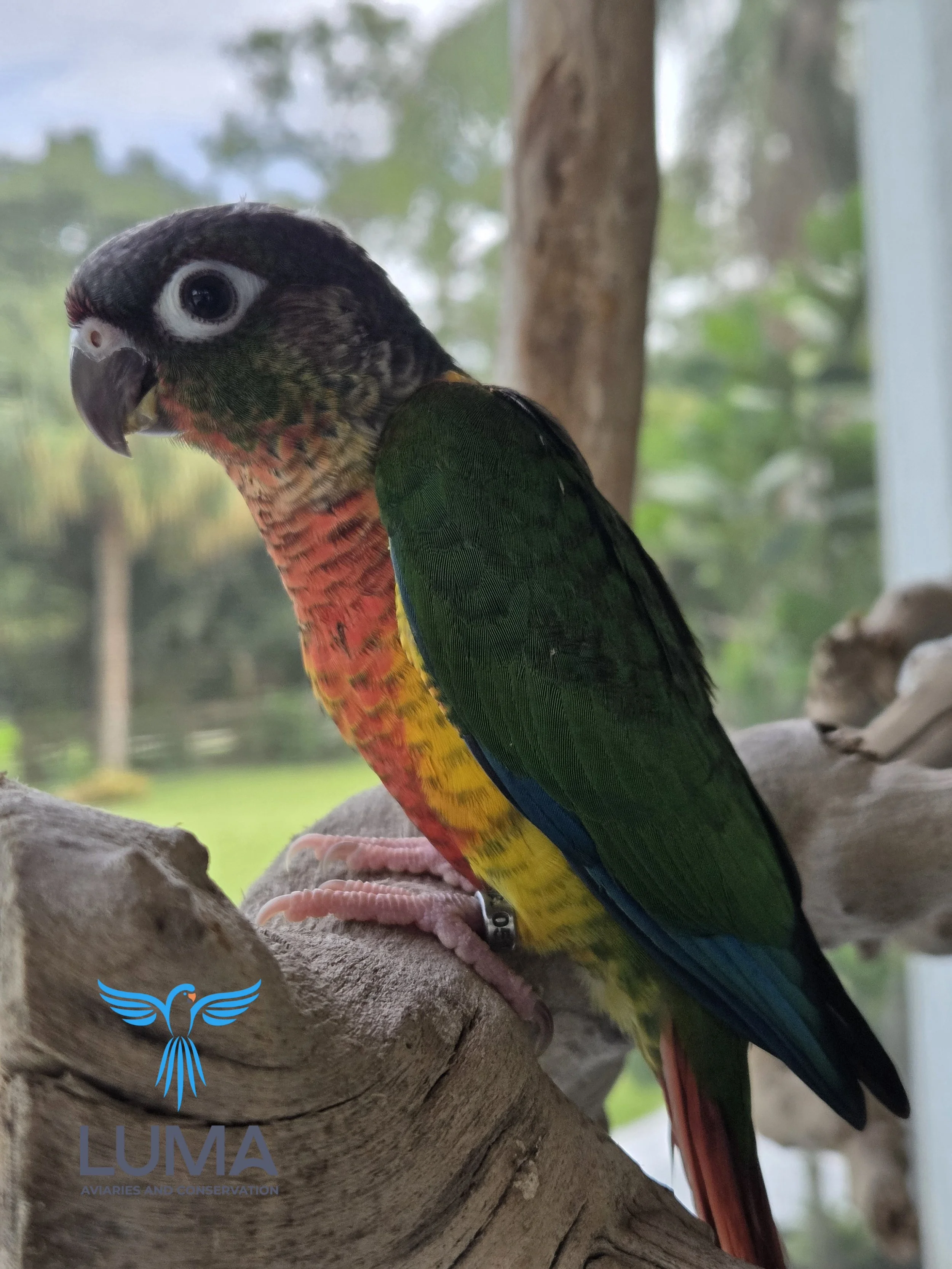
Yellow-Sided (Opaline) Green Cheek Conure : Contains the opaline mutation.
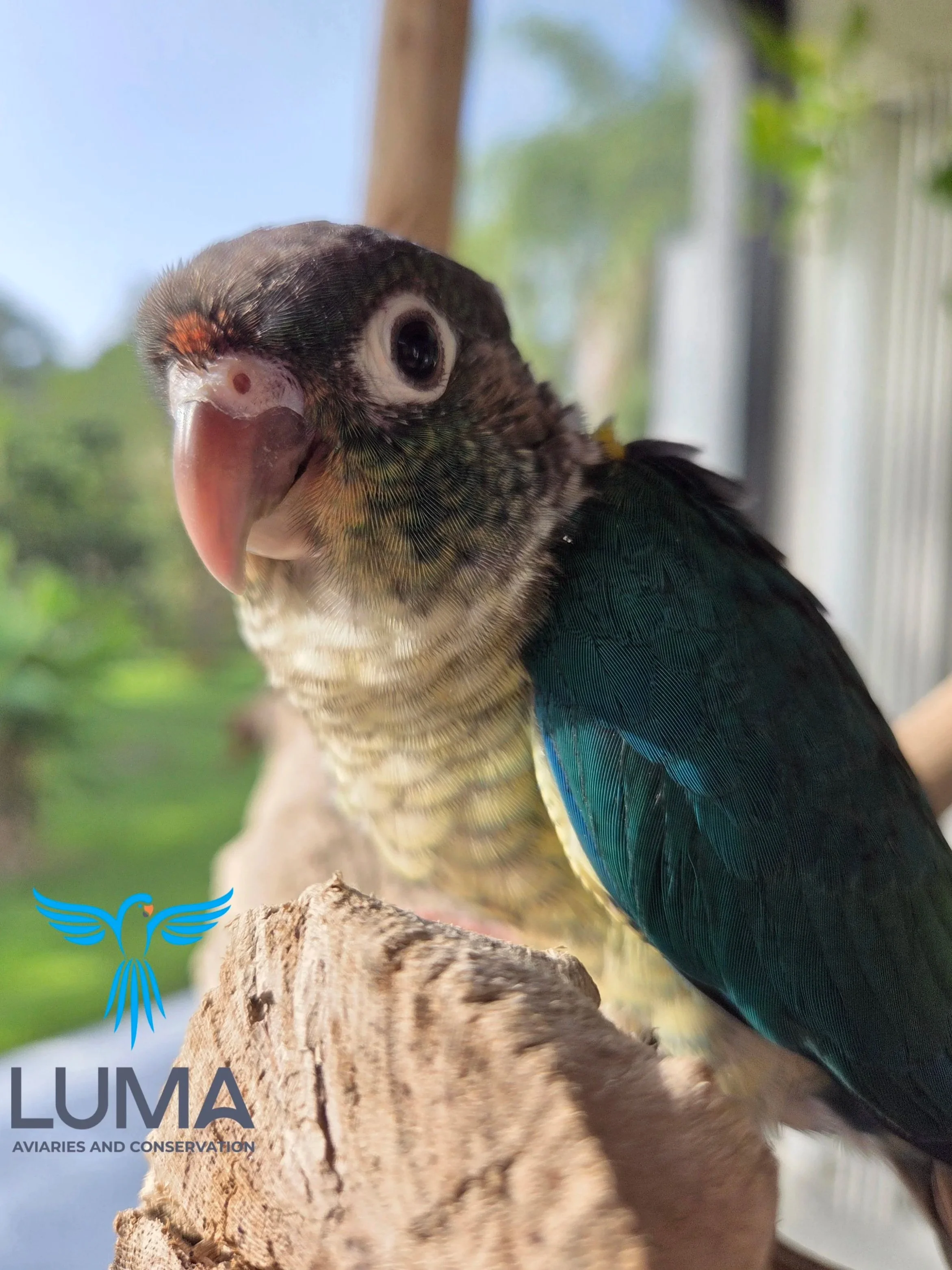
Turquoise Yellow-Sided Green Cheek Conure: a combination of the Opaline and Turquoise Color mutations
Dominant Red Suncheek :A combination of Dominant Red, Opaline, Cinnamon and Dilute
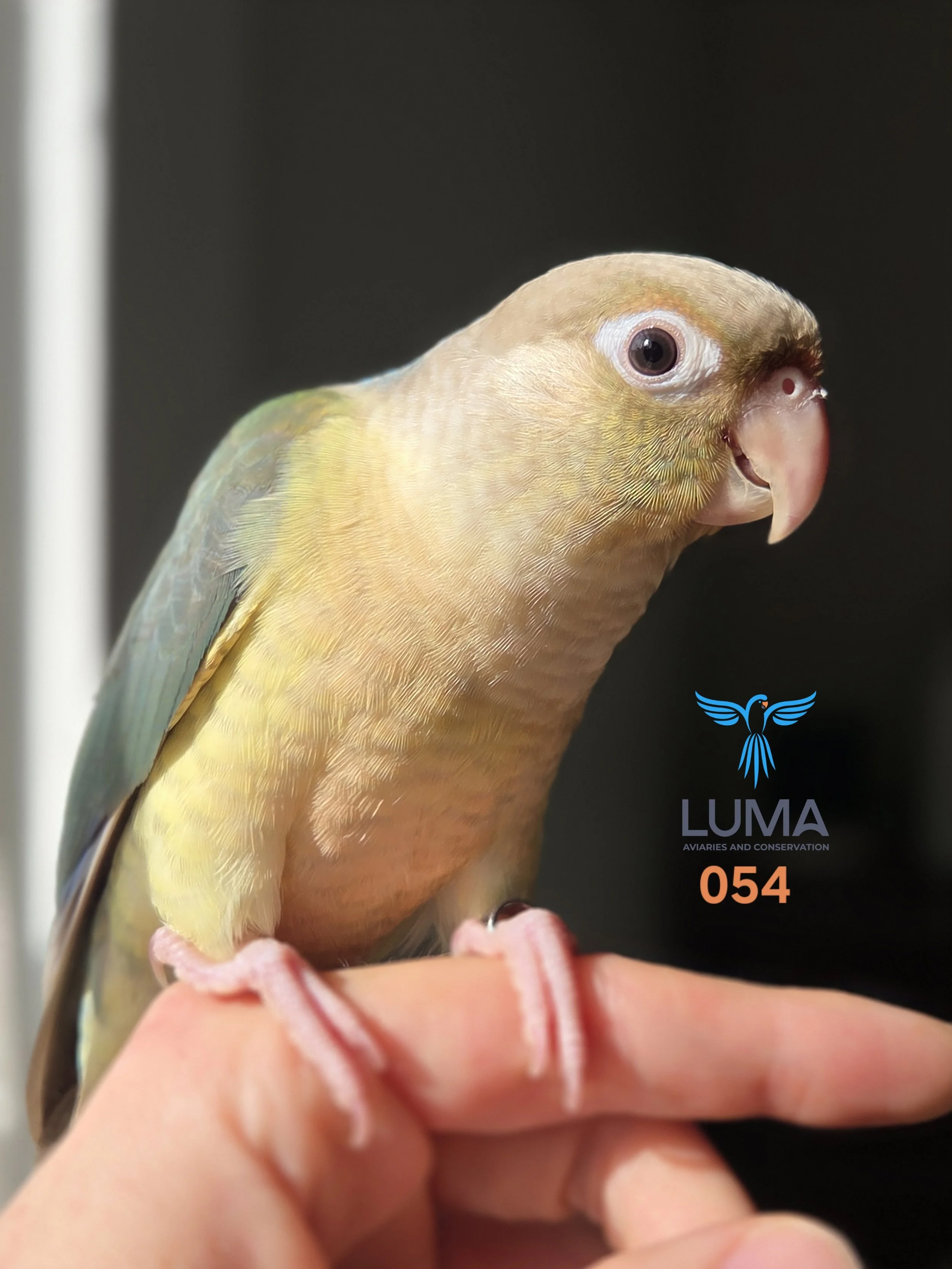
Turquoise Pineapple . A combination of Turquoise, Cinnamon and Opaline
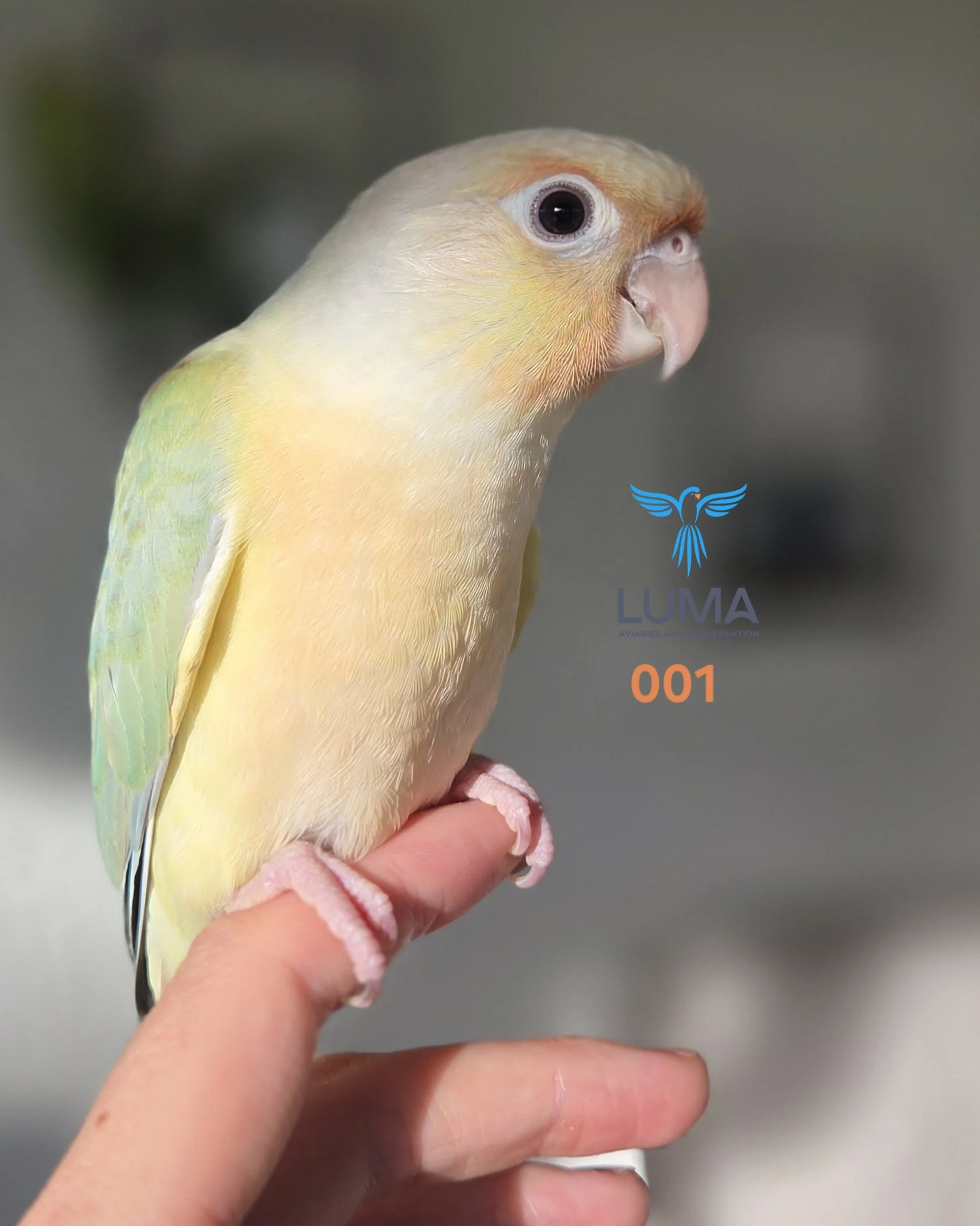
Opamint. A combination of Opaline, Turquoise, and Dilute (this individual has a lower amount of pigment in the beak/feet than average)