
Pacific Parrotlet
Luma Aviaries | Species Profile
Pacific Parrotlet
Forpus coelestis
Length
4.5–5.5 inches
Weight
~1 oz (24–33 g)
Native range
Ecuador and Peru
Noise level
Low to moderate
Arid lowland scrub and semi-open tropical deciduous woodland along the Pacific coast of Ecuador and northwestern Peru. They nest in tree cavities, fence posts, and abandoned nests of other species, foraging on berries, cactus fruits, and seeds.
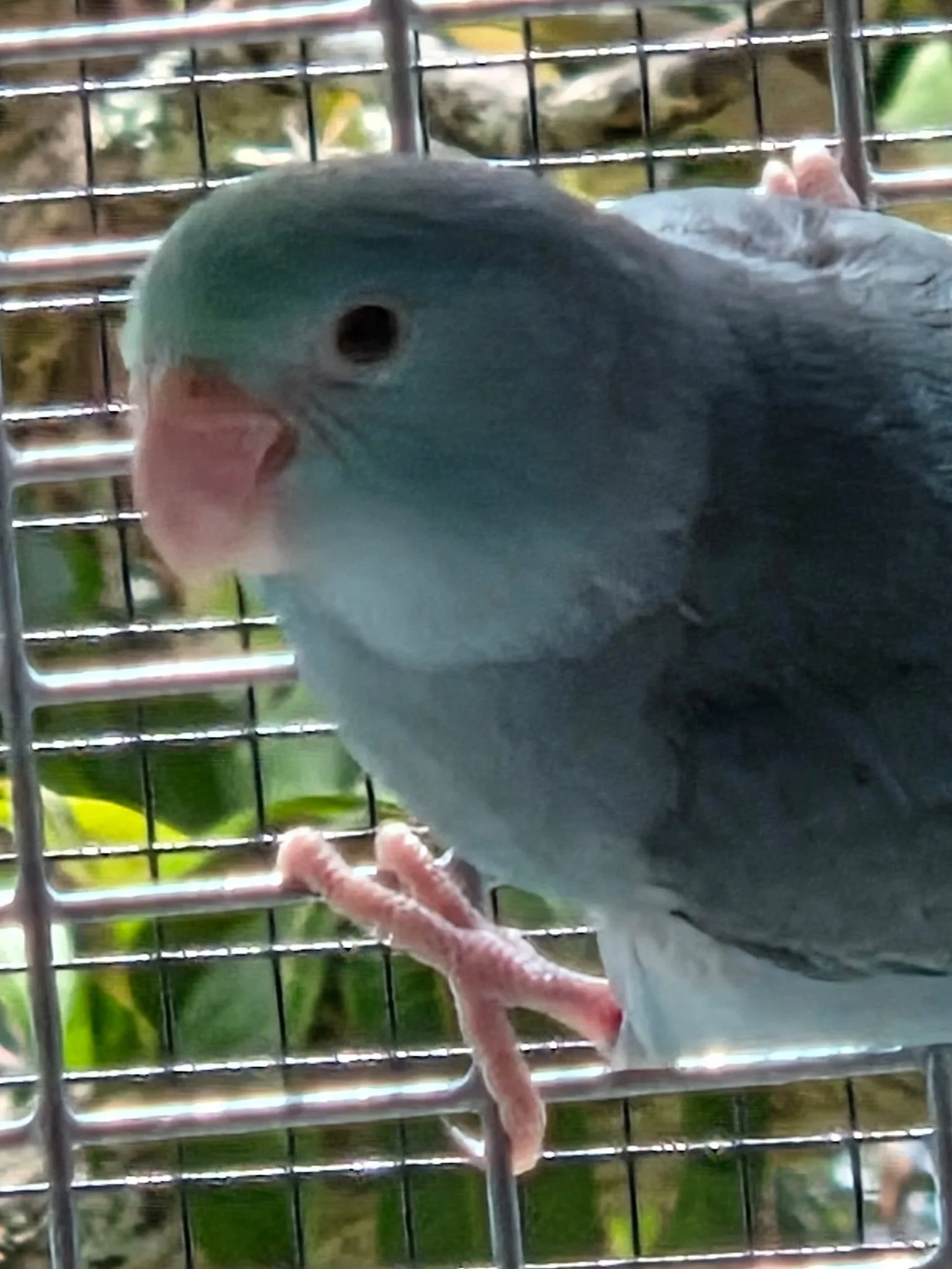
One of the smallest true parrots in the world. Wild birds are primarily green with a dusty grey cast, a bright green face mask, and a pinkish beak. Males have cobalt blue on the rump, wings, and a blue postocular stripe. Females are entirely green without the blue markings. Sexually dimorphic and easy to visually sex.
Captive mutations include Blue, Yellow, Albino, Lutino, American White, and Pied among others.
Often described as miniature Amazons; fearless, bold, and full of personality that far exceeds their size. They bond closely with their person and can be feisty with strangers or other birds. Best suited to owners who appreciate a confident, independent companion. Can learn to talk with practice.