
Indian Ringneck Parakeet
Luma Aviaries | Species Profile
Indian Ringneck Parakeet
Psittacula krameri manillensis
Length
14–17 inches
Weight
4–5 oz (115–140 g)
Native range
India and Pakistan
Noise level
Moderate to high
Semi-desert, open woodland, forest edges, farmland, and urban parks across the Indian subcontinent and parts of Africa. A highly adaptable species that has established feral populations across Europe, the Middle East, and North America.
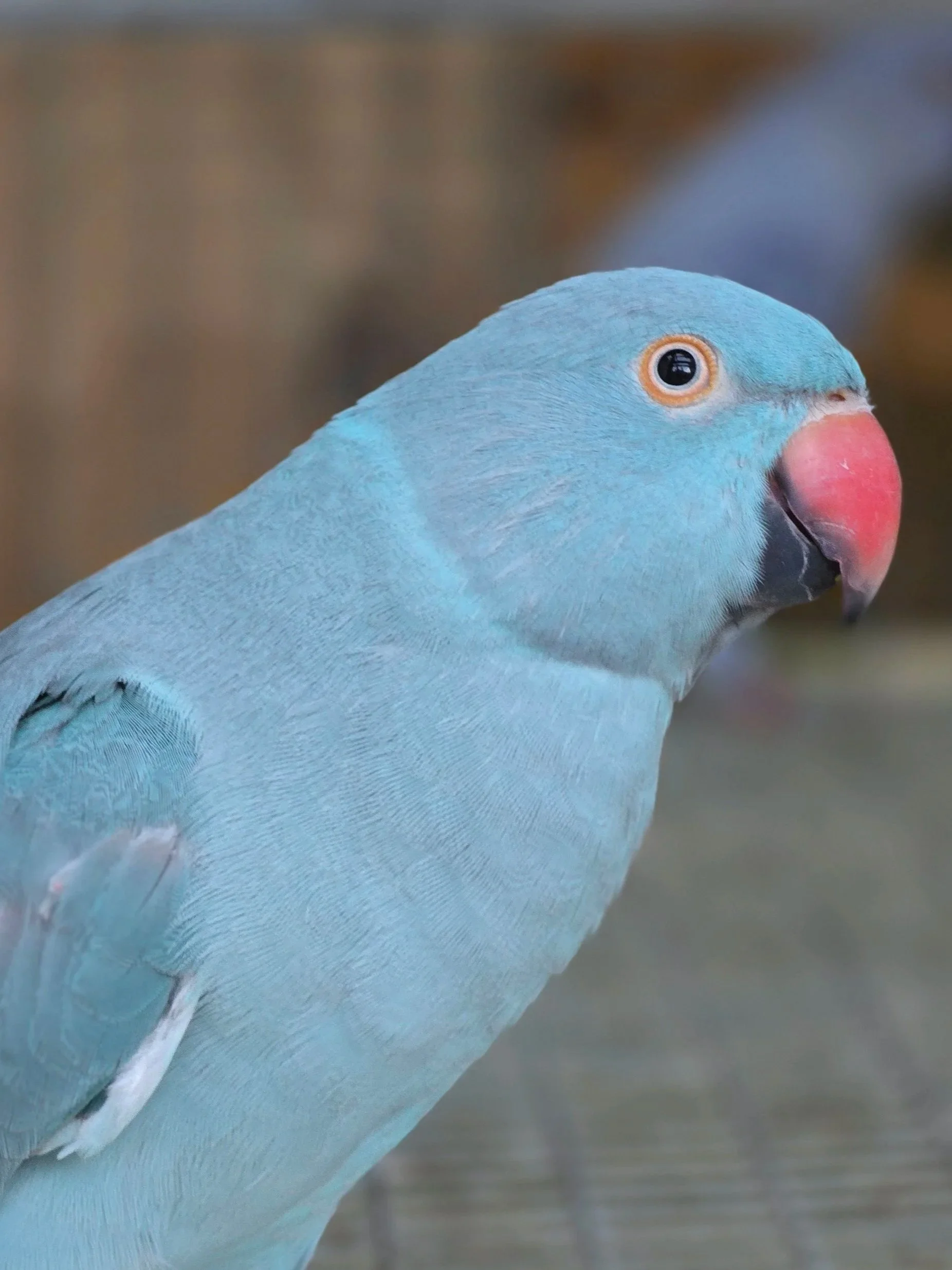
A slender, elegant bird with a long graduated tail that makes up nearly half its total length. Wild birds are bright green with a red beak. Mature males display the species signature three-part neck ring in black, rose-pink, and teal. Females lack the ring or show only a faint shadow. Captive mutations are extensive.
Mutations include Blue, Yellow, White, Albino, Lutino, Cobalt, Violet, Grey, and Pied among many others.
Intelligent, curious, and capable of impressive vocabularies. IRNs go through a bluffing phase around 4 months of age that requires patient, consistent handling. With regular socialization they become affectionate and engaging companions. Excellent talkers with clear, articulate speech.